Alex S. Maclean y el renacimiento de las ciudades arruinadas (I)

…     1.-Alex S. Maclean publicó en español en el año 2003 un libro magnífico: La fotografía del territorio. En él se incluía en primer lugar una maravillosa selección de fotografías aéreas del paisaje norteamericano agrupadas en función de los temas tratados: tramas urbanas, el entorno construido por los indios nativos, agricultura, bosques, abandono, fronteras/límites, sprawl, contaminación…La cosa no acababa aquí porque el volumen (de la prestigiosa editorial Gustavo Gili) añadía un trabajo de James Corner sobre “El paisaje norteamericano desde el aire” y otro de Jean-Marc Besse sobre “Geografías aéreas”. Como guinda, una entrevista de Gilles A. Tibergien al autor.

No voy a comentar ahora el libro, porque es uno de mis manuales de cabecera. Lo visito frecuentemente y sé que en este cuaderno aparecerán a menudo varias citas o reflexiones nacidas a su amparo.

*

2.-En la entrevista aparece una referencia preciosa a John Brinckerhoff Jackson, ya que Maclean le conoció y asistió a sus clases. Llevo ya varios días con la lectura del libro de Jackson Discovering the Vernacular Landscape y, como ya me habían avisado, es un autor interesantísimo, que mira el territorio desde su impresionante bagaje cultural, desde la práctica realista de sus viajes en moto y desde su humor y falta de prejuicios. Su estima por el paisaje elaborado por los seres humanos le llevó en ocasiones a fuertes controversias con varias figuras del movimiento ecologista y ambientalista norteamericano.

**

3.-El problema de Maclean es, a veces, su innata capacidad estética. Aunque quiere denunciar, todo lo trastoca en belleza a través de sus fotografías. Desmiente constantemente el aviso de Le Corbusier (transcrito en la p. 363 del libro citado en el primer párrafo):

Deseamos cambiar algo del mundo presente. Porque la vista aérea nos ha brindado el espectáculo de nuestras ciudades y del país que las rodea y ese espectáculo es indigno […]¡El avión acusaAcusa a la ciudad! Acusa a los que dirigen la ciudad.”

***

Le Corbusier in Madrid .

1.-Two days in “la Villa y Corte”, between the historic core –“Tirso de Molina, Sol, Gran Vía, Tribunal, …” Sabina sang- and the northern periphery. Moving within Madrid. I have been walking in an interesting urban area, in front of “Monte de El Pardo”, a big forest, northwest of the capital. The neighborhood is named “Arroyo del Fresno”, between Mirasierra which is west and Puerta de Hierro which is south. It’s the north-west border of urban Madrid, before the impressive green extension of El Pardo.


  2.-The zone is a small show of some Modern Movement theories, mastered by Le Corbusier (although he didn’t design these specific places). We can easily observe the main ideas of the inspired French planner. For instance:


-There is a lot of green grounds, normally filled with carefully orchestrated parks, with different classes of trees -pines, firs, trees of riverside forest, etc.-, grass, bushes and abundant areas for playground, sports, walking…


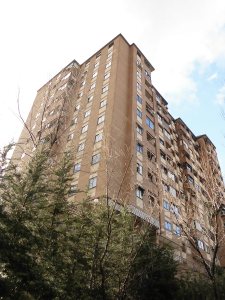
-The buildings are very high (normally, eleven floors or more). There is a large separation between them. The separation allows sunshine and ventilation for all the dwellings. That was a relevant obsession for Le Corbusier.


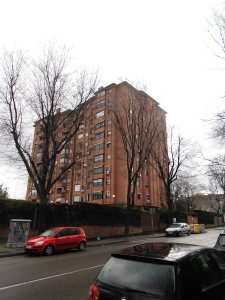
-The functional specialization is extreme. Actually, these high buildings are only for residential purposes. There is always a gated area before the entrance to the properties. This zone includes gardens, car parks and –in some cases- reduced sport or playground sectors.


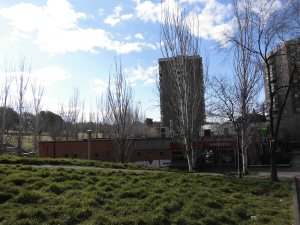
-Any  commercial use is forbidden. Actually, there are only dedicated plots for shops or restaurants. I suppose people need to shop in other parts of the city or in remote malls.


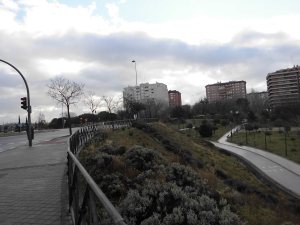
-There are often some examples of secluded paths only for pedestrians , bicycles and not motorised vehicles. This was another important idea for Le Corbusier.


-The neighborhood is well connected by two highways on the edge, one rail station and one underground stop. As well as,  several bus lines inside the district and linked with other parts of Madrid.

.

3.-Is Arroyo del Fresno a compact city? I don’t know. There is a relatively low density , there aren’t mixed uses and a lot of details show we are in a middle-high class zone. Actually, we are in a peculiar form of sprawl. Of course, everything seems far: shops, jobs, factories…But people seem happy with this specialized silence.

A lot of parks and arranged gardens


Trees, bushes, gardens, parks...
Trees, bushes, gardens, parks…


CIMG0399


CIMG0397

CIMG0391CIMG0394

High and compact buildings
Isolated buildings. Good sunshine.


Gated area before entrance
General view.
General view.
CIMG0365
Different paths for cars, pedestrians and bikes.


The north-west border of MAdrid
Only for pedestrians


CIMG0419

CIMG0414


Gated communities in urban Madrid? Of course, but not in suburbs.
Gated communities in urban Madrid? Of course, but yet not in  a suburb.


[Pictures Copyright: J.Amenós]

***